
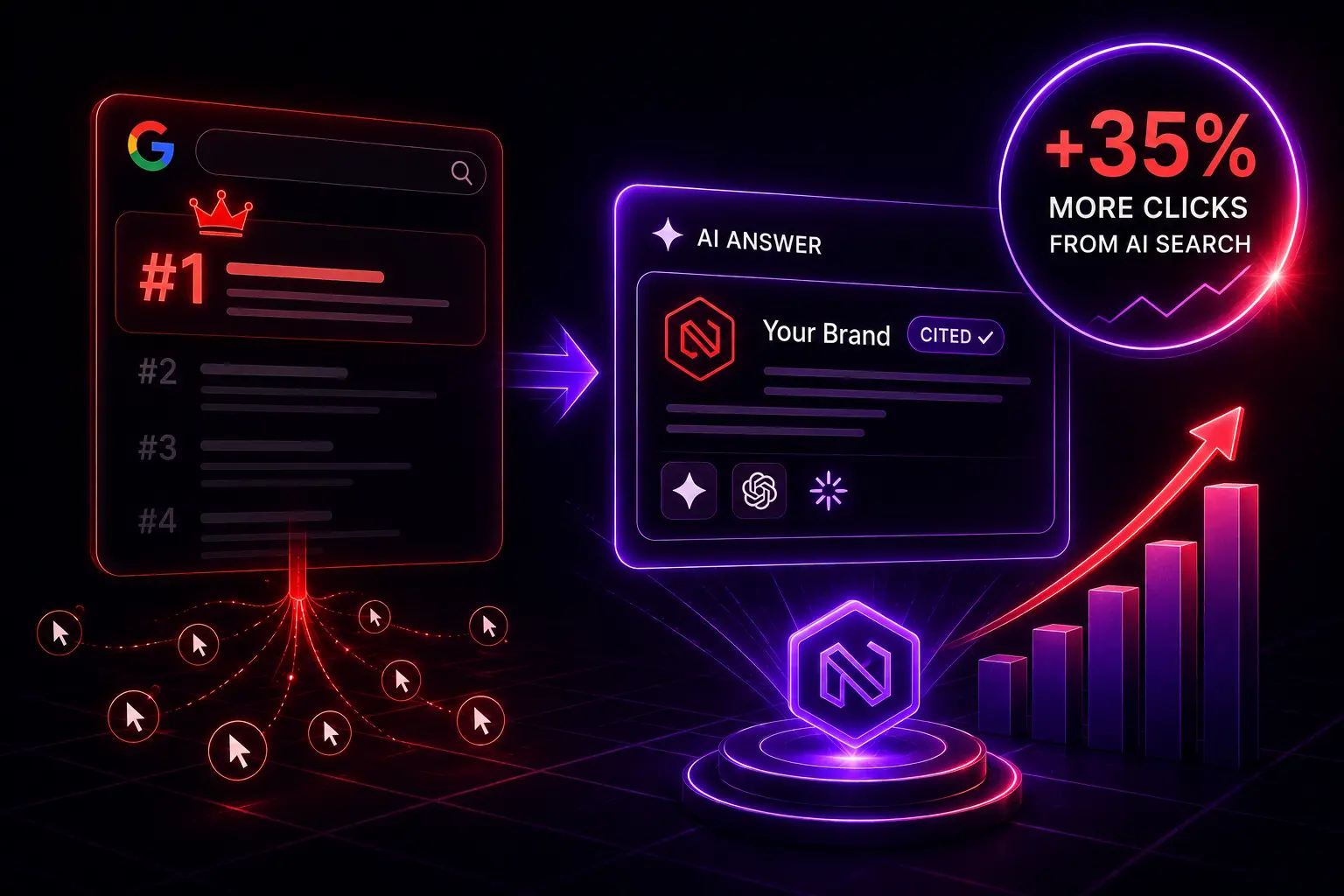
Here is the upside buried in all the no-click doom: brands cited inside Google’s AI Overviews earn roughly 35% more organic clicks than uncited competitors on the same query. That figure comes from Seer Interactive’s analysis of 3,119 informational queries and 25.1 million organic impressions. The AI box isn’t only taking clicks, it is concentrating them on the brands it names.
At NuroSparX, getting cited is our core offer, so we have spent this year reverse-engineering what actually earns the citation. It comes down to four things you can control. None of them are magic. All of them are work most competitors haven’t done yet, which is exactly why the window is open.
Short version
Brands cited inside AI Overviews earn about 35% more organic clicks than uncited rivals (Seer Interactive). To get cited you need four things: content the AI can crawl, a thorough answer to the exact question, trust signals from outside your own website, and consistent data across the web.
The four things that get you cited
AI systems cite sources they can crawl, that answer the precise question in depth, that carry third-party trust, and whose facts stay consistent everywhere. Miss one and the AI model reaches for a competitor that nails all four.
First, crawlable: if the AI model can’t access and parse your page cleanly, you are out before you start, so kill render-blocking, thin content and walled-off pages. Second, depth on the exact question: pages that fully answer the specific query, not adjacent fluff, get lifted. Third, third-party trust: mentions, reviews and references on sites the AI model already trusts tell it you are credible. Fourth, consistency: when your facts, name, numbers and claims match across the web, the AI model trusts and quotes them. Seer’s data ties this directly to the 35% citation premium, so this is not abstract, it is click revenue.
[IMAGE PLACEMENT: Insert In-Content Image 1 here – 800×450]
How an ecom brand went from uncited to cited in six weeks
We took an ecommerce brand that never appeared in AI answers for its category and rebuilt its key pages around the four citation factors. Within six weeks it was being named as a source in AI Overviews for its core buying queries.
The brand ranked fine in classic search but was invisible inside the AI box. We fixed crawlability first, cleaning up bloated pages so the content was easy to parse. Then we rewrote the top product and buying-guide pages to answer the exact questions shoppers ask, with specs, comparisons and clear recommendations up front. We chased a handful of trusted third-party mentions and reviews, and we standardized the product data, names and claims everywhere they appeared. The order mattered: crawlability and depth first, because they are the things you fully control, then trust and consistency, which take a little longer to compound. Six weeks later the brand started showing up as a cited source on its money queries, and the clicks followed.
[IMAGE PLACEMENT: Insert In-Content Image 2 here – 800×450]
What this means in plain English for you
Citation is buildable and the payoff is measurable. Pick your highest-intent queries, hit the four factors hard on those pages, and you can move from invisible to named inside the answer in weeks, not quarters.
This is exactly the GEO work, meaning AI visibility work in our search and content growth engine. We start where the money is, your highest-intent queries, run them through the four-factor framework, and rebuild the pages so the AI model can crawl, trust and quote you. Then we track which queries actually start citing you and keep tightening. The 35% figure is the prize, and it is real clicks, not a vanity score.
What we’d do first
Five practical moves to earn AI citations on your money queries:
- Confirm the page is fully crawlable: no render-blocking, no thin content, no accidental noindex.
- Rewrite the page to answer the exact query in depth, with the direct answer up top.
- Earn trust signals from outside your own website: reviews, mentions and references on sites the AI model already trusts.
- Standardize your facts, names, numbers and claims so they match everywhere they appear.
- Track citations by query and reinforce the pages that start getting named.
Bottom line
Getting cited isn’t luck, it is four controllable factors applied to the right pages. Hit them and you can move from invisible to named inside the AI answer in a matter of weeks, and capture the 35% click premium that comes with it.
We do this as our core GEO offer, starting with your highest-intent queries and rebuilding the pages that should be cited but aren’t. If you want to know which of your pages are one step away from getting named in AI Overviews, get your free AI visibility audit and we will show you the gaps.
Get your free AI visibility audit
Frequently Asked Questions
How many more clicks do cited brands really get?
Seer Interactive’s analysis of 3,119 queries found brands cited inside AI Overviews earn about 35% more organic clicks than uncited brands on the same query, and roughly 91% more paid clicks. Being named in the answer concentrates the clicks that still happen.
What are the four things that get me cited in AI Overviews?
Crawlability so the AI model can read your page, depth that fully answers the exact question, trust signals from outside your own website like reviews and mentions on trusted sites, and consistency so your facts match across the web. Nail all four and you become a easy to cite source.
How long does it take to get cited?
It varies, but it can move fast on targeted pages. We took an ecommerce brand from uncited to cited in its core buying queries in about six weeks by fixing crawlability, deepening the answers, earning trust signals and standardizing its data.
Is getting cited different from ranking?
Yes. Ranking is about your position in the link list. Getting cited is about being named as a source inside the AI answer itself. The two are related, but citation is the higher-value goal now because the answer captures most of the attention.
Do third-party trust signals really matter for citations?
Yes. AI systems lean on sources they already trust, so reviews, mentions and references on credible third-party sites raise your odds of being cited. They tell the AI model you are a legitimate authority worth quoting, not just another page. Even a handful of mentions on well-regarded industry sites can shift whether the AI model picks you over an equally relevant competitor that nobody else vouches for.