
Your company is about to get a lot of new workers, and they’re AI agents. Enterprise businesses worldwide are adopting AI agents fast, and 96% plan to expand their use across several business areas over the next year, according to new research from Cloudera.
AI agents are already here
AI agents do far more than simple chatbots that answer basic questions. Today’s AI agents are autonomous digital workers that can analyze data, make decisions and complete complex tasks without constant human supervision. They’re already changing how businesses operate, and the pace is speeding up.
More than half (57%) of enterprise IT leaders say they’ve put AI agents in place in the past two years, and 21% adopted them in the last year alone. Companies have moved past experiments to full-scale use.
What AI agents do
Think of AI agents as smart digital assistants that can handle whole workflows as well as single tasks. Real businesses already use them for:
Customer service: AI agents handle complex customer questions that traditional chatbots couldn’t, give personal step-by-step instructions, and analyze conversations to raise satisfaction.
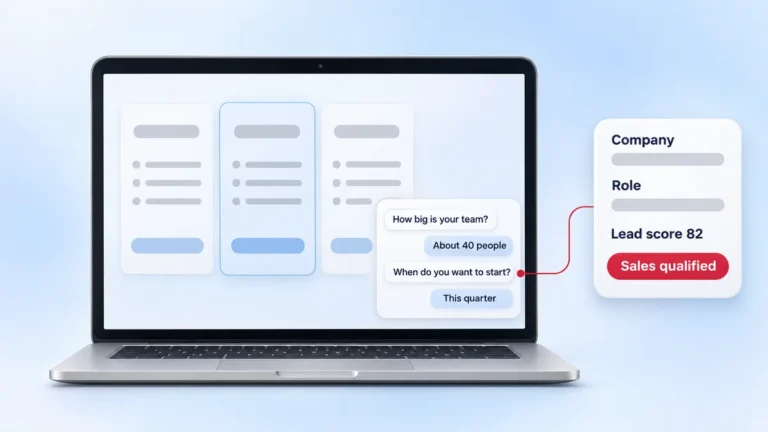
Sales automation: These digital workers can qualify leads, schedule meetings, follow up with prospects and even negotiate basic contract terms, 24/7 without breaks.
Financial operations: AI agents process invoices, spot fraud patterns, handle routine accounting tasks and produce financial reports with little human oversight.
Supply chain planning: Advanced agents analyze market trends, weather data and social media sentiment to predict demand and adjust inventory orders automatically.
The business impact is large
Early enterprise deployments already show up to 50% efficiency gains in customer service, sales and HR, according to management consulting firm Alvarez & Marsal. Market forecasts point the same way:
• $5.1 billion market in 2024, projected to reach $47.1 billion by 2030
• 44.8% annual growth rate in the AI agent market
• Up to 100% ROI expected by more than 60% of companies investing in agentic AI
• $80 billion cost reduction predicted for contact centers within two years
Why 2025 is the turning point
“2025 might be the year we go from experiments to large-scale adoption,” says Rachana Gajjar, an AI expert at IBM. Four factors are driving the shift:
Mature technology: AI models can now handle complex reasoning and multi-step tasks that were impossible two years ago.
Proven ROI: Early adopters are showing clear business value, which encourages others to adopt.
Easier integration: New platforms make it easier to add agents to existing business systems without major overhauls.
Competitive pressure: Companies worry about falling behind competitors who already use AI agents to get ahead.
Teams of agents come next
In the next phase, teams of specialized agents work together. Imagine a sales team where:
• One agent finds and qualifies leads
• Another agent researches prospects and personalizes outreach
• A third agent schedules meetings and handles early negotiations
• A final agent processes contracts and hands off to customer success
An AI orchestrator coordinates them all: it manages the whole workflow, assigns tasks and checks quality. Companies are already testing these multi-agent systems.
How different industries use AI agents
Healthcare: AI agents analyze patient data, schedule appointments, handle insurance verification, and even help with preliminary diagnosis by reviewing symptoms and medical history.
Manufacturing: Agents monitor equipment performance, predict maintenance needs, plan production schedules and order replacement parts automatically.
Legal services: AI agents review contracts, do legal research, draft basic documents and manage case timelines.
Marketing: Agents analyze customer behavior, create personalized campaigns, adjust ad spending in real time and produce content variations for A/B testing.
Will AI agents take jobs?
Will AI agents replace human workers? The answer is mixed. Research suggests that AI will automate certain tasks and people will move to higher-value work:
Support for people: Most successful rollouts use AI agents for routine tasks while people focus on strategy, creative work and relationships.
New roles: Companies need “AI orchestrators” who manage teams of agents, and “human-AI collaboration specialists” who improve workflows between digital and human workers.
New skills: Workers are learning to supervise AI agents, interpret their output and handle exceptions that need human judgment.
Common challenges and how to solve them
Performance quality: For 45.8% of small businesses, the top concern is making sure AI agents deliver accurate results every time. The fix: start with low-risk, repetitive tasks and expand as confidence grows.
Security and compliance: 78% of CIOs cite security as a main barrier. Leading platforms like IBM watsonx and Microsoft Copilot are building strong governance frameworks into their products to address it.
Integration: Many companies struggle to connect AI agents to their existing systems. Cloud platforms make this easier with pre-built connectors and APIs.
Getting started with AI agents
First steps:
• Find repetitive, time-consuming tasks that need some decisions but follow predictable patterns
• Start small with pilot programs in customer service, appointment scheduling or data analysis
• Measure success with clear KPIs like processing time, accuracy rates and cost savings
• Plan for governance by setting up human oversight and quality checks
A proven rollout path:
- Assessment: Map current workflows to find tasks worth automating
- Pilot: Use agents for specific, contained use cases
- Learn and adjust: Refine based on performance data and user feedback
- Scale: Roll successful agents out across departments
- Orchestration: Build multi-agent systems for complex workflows
AI agents by business size
For small and medium businesses: AI agents could level the playing field by giving you enterprise-level automation without huge IT spending. Focus on high-impact areas like customer service and admin tasks.
For large enterprises: AI agents can rework whole workflows and build a competitive edge. Companies that integrate AI agents across operations will significantly outperform those that don’t.
For IT leaders: Now is the time to build AI governance frameworks, evaluate platforms and start training teams on human-AI collaboration.
AI agents are already in the workplace. Businesses will adopt them, so the real decision is how quickly and how carefully you put them to work for growth, efficiency and competitive advantage. Companies that move now will shape the future of work, and those that wait risk losing ground to faster competitors.
You're All Set!
We have your request.
Expect a reply from our team within 24 hours. Want to talk sooner? Pick a time below.
Or call us at +1 (914) 297-6638
Frequently asked questions
How are AI agents different from regular chatbots or automation tools?
AI agents can analyze information, make complex decisions and adapt to new situations on their own. Simple chatbots give scripted responses, and basic automation follows rigid rules. AI agents can handle unpredictable situations and multi-step workflows.
How long does it take to put AI agents to work in my business?
Most companies start pilot programs in 3 to 6 months, see real results within 6 to 12 months, and reach full-scale use within 12 to 18 months. Start with simple use cases and add complexity step by step.
How much do AI agents cost compared to human employees?
Costs vary widely by platform and use case, but many companies report 25 to 50% cost reductions for automated tasks. Setup takes an upfront investment, and for routine tasks the running costs are typically much lower than the same human labor.
Will AI agents make human employees obsolete?
Current evidence suggests AI agents support human workers more than they replace them. AI takes over some routine tasks, and people move to higher-value work like strategy, creative work and managing AI systems. New roles are appearing in human-AI collaboration.